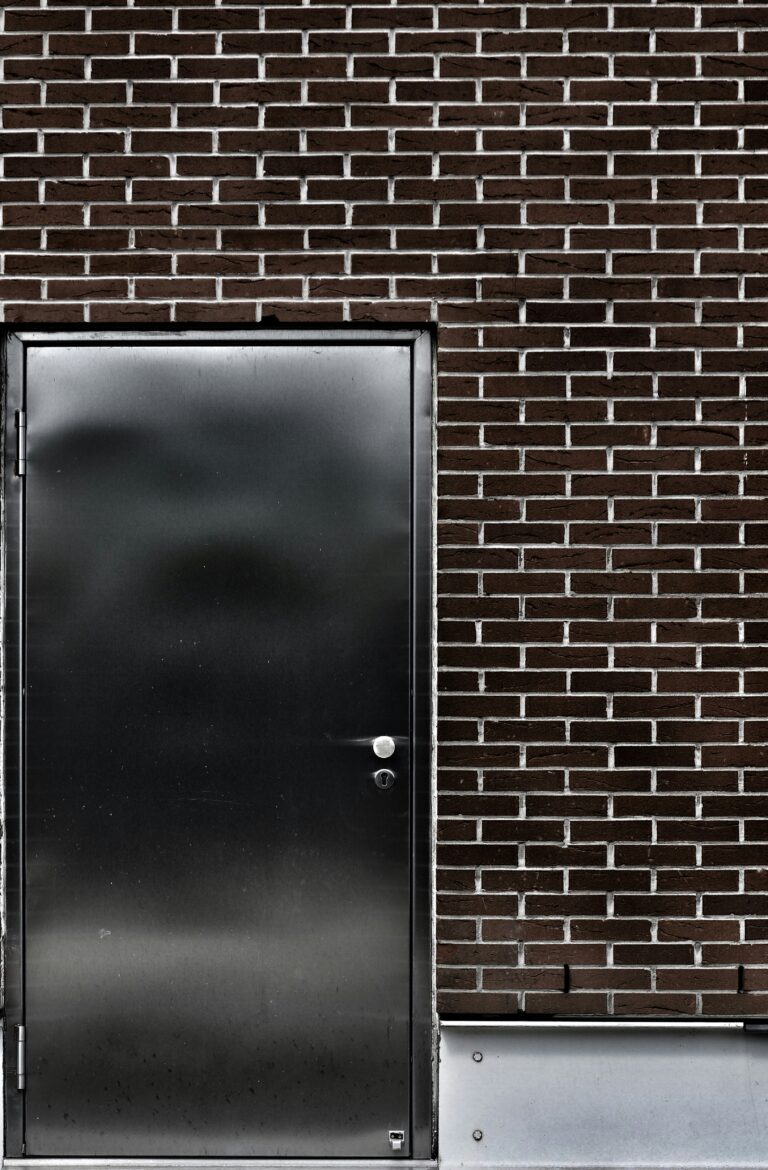
Not every old door needs replacing with steel.
That may seem like an unusual opening for an article about steel doors, but it is an important point.
If an existing door is in good condition, suitable for the building and provides the level of security and performance required, there is little sense in replacing it simply because steel sounds stronger.
A steel door becomes worthwhile when there is a reason for using one.
Perhaps an exposed timber door requires constant maintenance.
Maybe a rear entrance feels too vulnerable.
A communal door could be struggling with heavy everyday use.
A commercial premises might need better control over staff access.
Or the project may have a formal requirement for fire resistance or tested security.
Rhiwbina contains a mixture of established homes, local businesses, communal properties, schools and other facilities, so there is no single steel door specification that fits every building.
Here are the situations where upgrading to steel can make practical sense.
1. When a Secondary Entrance Is More Vulnerable Than the Front Door
Residential security often concentrates on the front of the property.
But what about the side?
Or the back?
Garages, workshops, rear extensions and garden access points may contain tools, bicycles and equipment or provide another route into the main property.
If an older door has become warped, weak around the locking area or difficult to close, adding extra locks does not always address the underlying problem.
A steel doorset can provide a more robust replacement where stronger physical protection is appropriate.
Potential residential applications include:
- Garage personnel doors
- Rear entrances
- Side doors
- Workshops
- Garden storage
- Utility areas
- Basement access
Choosing steel does not automatically mean choosing the most aggressive-looking security product available. The specification can be kept proportionate to the actual purpose.
2. When a Door Is Simply Being Used Too Much
Frequency of use is one of the most overlooked parts of door selection.
An entrance used by a family is different from an entrance used by twenty residents.
And that is different again from a staff door at a commercial property.
Repeated opening and closing places demands on hinges, closers, locks and the frame. If the door was never designed for that level of use, maintenance issues can become frequent.
Steel doors are well suited to many high-use environments because the complete assembly can be specified for durability.
Examples around communal and managed properties can include:
- Bin rooms
- Bike stores
- Meter rooms
- Plant areas
- Shared garages
- Service corridors
- Maintenance spaces
The hardware is just as important as the steel leaf. A robust door with an unsuitable closer or lightweight lock is not a properly coordinated system.
3. When a Business Has Outgrown Its Existing Entrance
Properties change.
A small storage room can become a stock room.
A quiet side entrance can become the main staff access point.
A unit that previously received occasional deliveries may now receive them every day.
When building use changes, the door specification should sometimes change with it.
A commercial steel door can be designed around practical requirements such as staff movement, deliveries, locking arrangements and access control.
For wider openings, double doors may be useful. One leaf can remain closed for normal pedestrian access while both leaves are opened when larger items need to pass through.
Vision panels may help where people approach the door from both sides.
Access-control preparation may be useful where multiple employees need entry without distributing large numbers of keys.
The right arrangement depends on the operation of the business.
4. When Security Has to Be Demonstrated Rather Than Assumed
For an ordinary low-risk application, the physical strength of a suitable steel doorset may be enough for the customer’s needs.
Some projects have more formal requirements.
A specification could call for independently tested resistance to forced entry, particularly where valuable assets, sensitive equipment or restricted areas are involved.
This is where tested systems such as LPS 1175 security doors may become relevant.
The distinction matters because a door looking strong is not evidence that it has achieved a particular security rating.
Certification applies to a tested system and configuration.
If your Rhiwbina project has a specific security standard, identify it before manufacture so that the doorset and hardware can be specified correctly.
5. When Fire Performance Is Part of the Project
A further reason for selecting a specialist steel doorset is fire resistance.
But again, material alone does not provide certification.
A normal steel door should not be described as fire rated unless it forms part of an appropriate tested system.
Where a fire-rated doorset is required, the leaf, frame, seals, glazing and hardware have to work together.
Possible locations include certain plant rooms, service spaces, protected routes and commercial or communal buildings.
The actual requirement will depend on the project’s fire strategy and building arrangements.
One of the most common specification mistakes is deciding the hardware first and discovering later that it conflicts with the required fire-door configuration.
It is far easier to coordinate everything at the beginning.
6. When a Standard Door Does Not Fit Properly
Rhiwbina includes many established properties, and older openings do not always match modern standard dimensions.
Previous extensions and refurbishments can create further variations.
Installing an undersized standard door and filling the gaps around it is rarely the ideal solution where security and durability matter.
A made-to-measure steel doorset can be manufactured around accurate site dimensions.
Customisation can include:
- Height and width
- Single or double configuration
- Colours and finishes
- Vision glazing
- Louvre panels
- Locking arrangements
- Handles
- Door closers
- Access-control preparation
- Threshold options
This does not mean every possible feature should be added.
Quite the opposite.
A good specification includes only what the opening genuinely needs.
Security Should Not Make Escape Difficult
There is an important balance between preventing unauthorised access and allowing people to leave safely.
Commercial, public and communal buildings may have doors forming part of escape routes. In these situations, the internal escape hardware needs to be appropriate for the occupancy and use of the building.
Panic bars or emergency exit devices may be required in some applications.
The principle is straightforward: keeping people out must not create an unacceptable barrier to getting people out during an emergency.
Security hardware and fire-safety requirements therefore need to be coordinated.
External Doors Need Weather Protection Too
The strongest lock in Cardiff will not make a customer happy if rainwater regularly enters below the door.
External performance should be part of the conversation.
Exposure, seals, thresholds, drainage and the surrounding wall all matter.
If an existing opening has a history of water problems, investigate that history when the door is being surveyed. A new doorset may improve the situation, but problems originating from surrounding construction or drainage also need to be recognised.
When Steel Is Probably the Right Choice
A steel door is worth considering when you need a combination of:
- Increased physical security
- Greater durability
- Reduced problems from heavy use
- A made-to-measure opening
- Access-control compatibility
- Specialist fire performance
- Tested security performance
- A durable solution for external or service areas
It is less about the material itself and more about whether those characteristics solve a real problem at the property.
Steel Doors in Rhiwbina from AllSecureDoors Ltd
AllSecureDoors Ltd supplies and installs steel door systems throughout Cardiff, including Rhiwbina and surrounding CF14 areas.
Projects can range from straightforward residential rear and garage entrances through to commercial personnel doors, communal doors, fire-rated systems and independently tested security solutions.
If you are unsure whether a steel door is actually necessary, that is a perfectly sensible place to begin the conversation.
Explain what is wrong with the existing entrance, how the opening is used and what you want to improve.
From there, the correct specification becomes much clearer.
For steel doors in Rhiwbina and across Cardiff, contact AllSecureDoors Ltd on 0800 9877 007.